.svg)


.svg)


Topic
Text
Earth Data Insights by Latitudo40 è una piattaforma di Geospatial Intelligence che integra dati satellitari, modelli predittivi e strumenti collaborativi per potenziare le strategie ESG. Attraverso layer come LST, Urban Heat Island, flood risk e carbon storage, consente monitoraggio ambientale avanzato, simulazioni “what-if” e reporting allineato agli standard internazionali, trasformando l’ESG da compliance reattiva a governance proattiva e data-driven.
Article
Content
Why ESG Strategies Require Advanced Decision-Making Tools
The adoption of ESG strategies has become a defining element in corporate governance, as companies are expected to balance growth objectives with environmental sustainability and social responsibility. However, designing effective ESG policies requires more than compliance checklists: it demands a structured decision-making process supported by accurate, timely, and comprehensive data.
One of the main barriers organizations face lies in the quality and availability of environmental information. Traditional reporting frameworks often rely on fragmented or inconsistent datasets, making it difficult to evaluate the actual impact of interventions or to anticipate future risks. This limitation can result in strategies that are misaligned with sustainability goals, undermining both corporate credibility and long-term climate resilience.
To overcome these challenges, businesses and institutions need advanced digital tools capable of integrating reliable data, modeling potential scenarios, and supporting transparent communication with stakeholders. Earth observation technologies, combined with predictive analytics and collaborative platforms, are paving the way for a new generation of decision-support systems. These solutions enable organizations not only to monitor current conditions but also to forecast outcomes and optimize resource allocation.
In this evolving context, the ability to move from static ESG reporting to dynamic, data-driven governance is becoming a competitive advantage—and a prerequisite for creating a sustainable and livable future.
Introducing Latitudo40’s Earth Data Insights: A Revolution in Geospatial Intelligence
To address the limitations of traditional ESG reporting and monitoring, Latitudo40 has developed Earth Data Insights, an innovative Geospatial Intelligence Platform delivered as a SaaS solution. The platform represents a breakthrough in how organizations can design, evaluate, and communicate their ESG strategies, offering a unified environment where environmental monitoring, predictive modeling, and stakeholder engagement converge.

Unlike conventional tools that provide static datasets or fragmented analyses, Earth Data Insights combines earth observation data with advanced AI-powered simulations. This integration enables users not only to understand current conditions—the “as-is” environmental performance—but also to predict the impact of planned interventions. Whether it is assessing the benefits of reforestation projects, evaluating heat mitigation strategies in urban areas, or analyzing flood risks, the platform provides actionable insights to strengthen ESG policies and build climate resilience.
Another key innovation is the platform’s collaborative layer. Through map-based comments and feedback tools, stakeholders can actively participate in decision-making, making the governance process more inclusive and transparent. This participatory model, inspired by the concept of Urban Living Labs, democratizes access to satellite intelligence and fosters collective ownership of sustainability initiatives.
Finally, the platform simplifies communication by generating sustainability reports with just a few clicks. These reports are aligned with the most relevant international standards, reducing the burden of compliance while enhancing transparency. By combining monitoring, forecasting, collaboration, and reporting into one integrated tool, Earth Data Insights empowers organizations to move from reactive disclosure to proactive sustainability management.
In doing so, Latitudo40 has created not just a software solution, but a transformative instrument for companies, municipalities, and institutions striving to align their operations with global sustainability objectives.
Satellite Data Layers for ESG Reporting and Environmental Monitoring
A central challenge in ESG reporting is the lack of consistent, reliable, and comparable environmental data. To overcome this gap, the integration of earth observation datasets into decision-support platforms is becoming essential. By leveraging high-resolution satellite imagery, organizations can monitor environmental variables with precision, creating the foundation for robust ESG strategies and actionable ESG policies.
Latitudo40’s platform incorporates a series of specialized satellite data layers designed to track key environmental indicators at hyper-local scale. These layers allow organizations to move beyond generic metrics and measure variables directly connected to sustainability and climate resilience.
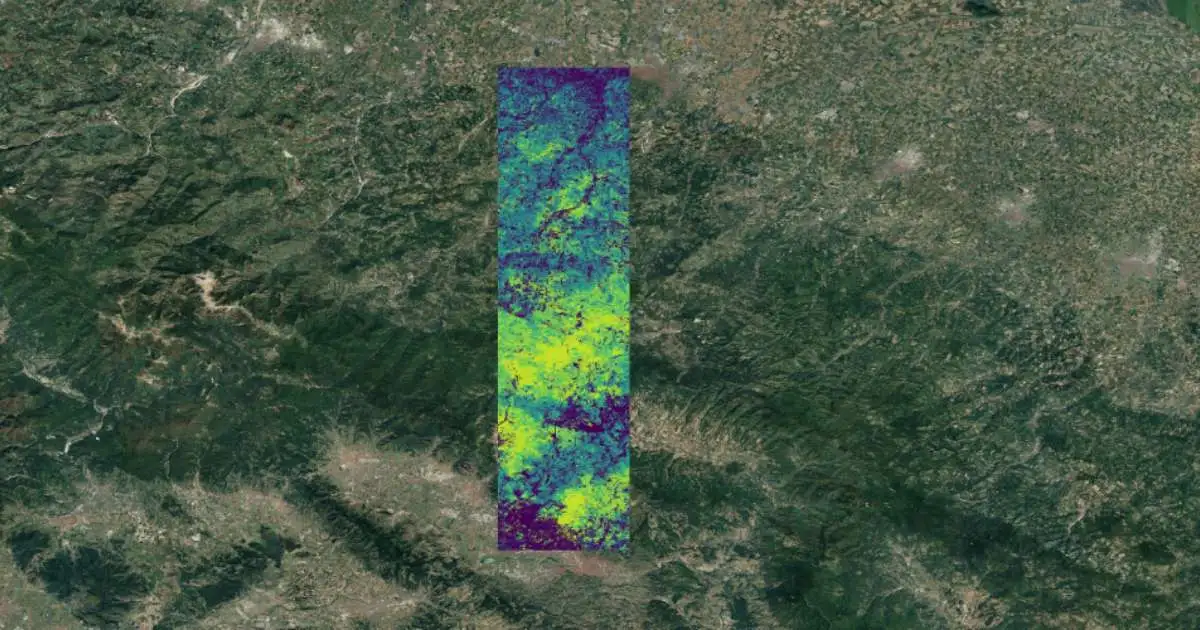
- Land Surface Temperature (LST): Measures the thermal footprint of urban and natural areas, helping identify hotspots and evaluate the effectiveness of cooling interventions.
- Urban Heat Island (UHI): Quantifies temperature differentials between urban and rural zones, providing insight into how urbanization intensifies heat stress and guiding mitigation strategies.
- Surface Albedo: Evaluates the reflectivity of surfaces to understand their influence on local microclimates and energy balance.
- Flood Risk Mapping: Assesses areas most vulnerable to inundation, supporting climate adaptation strategies and insurance risk assessments.
- Carbon Storage and Tree Cover Density: Measures the role of vegetation in carbon sequestration and ecosystem health, supporting reforestation initiatives and biodiversity strategies.
- Tree Height and Building Height Classification: Provides 3D urban and natural structure data, enabling detailed analyses of urban density, shading potential, and disaster preparedness.
- Park Cool Island and Microclimatic Performance Index: Capture the role of green spaces in cooling urban areas and improving overall environmental quality.
.webp)
These layers are not static datasets; they are updated regularly through satellite constellations, ensuring that organizations always have access to recent and consistent information. By combining them within a Geospatial Intelligence Platform, decision-makers can evaluate both baseline conditions and progress over time, enhancing the credibility and comparability of ESG reporting.
The ability to integrate multiple layers in a single view allows for more comprehensive analyses. For example, cross-referencing tree cover density with land surface temperature enables planners to quantify the cooling potential of reforestation projects. Similarly, combining flood risk data with building height classification supports more accurate urban resilience planning.
In this way, satellite data layers transform earth observation from a raw data source into a strategic enabler of sustainability governance. They allow companies, municipalities, and institutions to design ESG strategies grounded in scientific evidence, monitor the real-world impact of interventions, and align decisions with long-term sustainability objectives. By embedding these layers into reporting frameworks, organizations can deliver not only compliance-driven disclosures but also tangible evidence of their contribution to a more sustainable and livable future.
Predicting Future Scenarios with Simulation Models
An essential limitation of many current ESG strategies lies in their reactive nature: they measure outcomes after interventions are implemented but often fail to anticipate potential impacts beforehand. This reactive approach can lead to inefficiencies, wasted resources, or policies that do not deliver the expected environmental or social benefits. To overcome this, organizations are increasingly turning to simulation models, which transform ESG reporting from static disclosure into a dynamic decision-support process.
Simulation models combine historical data, earth observation inputs, and advanced algorithms to estimate how different interventions will shape environmental indicators in the future. By modeling interactions between variables such as land surface temperature, tree cover density, or flood risk, these tools create “what-if” scenarios that allow decision-makers to evaluate multiple strategies before choosing the most effective one.
For example, municipalities can simulate the impact of planting new urban green areas on reducing the urban heat island effect, while real estate developers may assess how new construction projects influence local microclimates or flood exposure. Insurers can use the same predictive models to forecast climate-related risks and adjust their portfolios accordingly. By quantifying expected outcomes, simulation models help align ESG policies with measurable targets, ensuring that interventions deliver tangible contributions to climate resilience.
.webp)
The advantage of integrating simulation into a Geospatial Intelligence Platform is that it bridges the gap between monitoring and action. Traditional environmental datasets describe the current state, while simulations extend this perspective into the future, offering foresight into how different strategies will evolve under changing climatic and socio-economic conditions. This dual perspective allows organizations to transition from compliance-driven reporting to proactive governance.
Moreover, simulation models improve transparency and accountability. Stakeholders can see not only the current situation but also how proposed initiatives are expected to perform over time. This enhances trust in corporate disclosures and facilitates informed participation in decision-making processes.
By embedding predictive capabilities into ESG workflows, organizations gain the ability to prioritize interventions with the greatest impact, optimize resource allocation, and anticipate regulatory shifts or climate-related risks. In this way, simulation models do more than support ESG reporting—they redefine it as a forward-looking, science-based tool for building strategies that safeguard ecosystems, strengthen resilience, and ensure long-term value creation.
Enhancing Stakeholder Engagement through Collaborative ESG Platforms
An essential element of effective ESG strategies is the involvement of stakeholders in decision-making. Transparent communication and participatory governance not only improve the quality of ESG policies but also build trust and shared responsibility among companies, institutions, and communities. Yet, conventional ESG reporting often reduces engagement to one-way disclosures, limiting opportunities for collaboration.
Latitudo40’s approach addresses this challenge by embedding collaborative tools directly into its Geospatial Intelligence Platform. Through interactive dashboards and map-based commenting features, stakeholders can annotate data layers, provide feedback, and co-design interventions. This participatory workflow aligns with the concept of Urban Living Labs, where diverse actors—planners, citizens, researchers, and businesses—work together to test and refine sustainability solutions. By enabling a more democratic use of earth observation data, the platform transforms reporting into a dialogue rather than a static compliance exercise.
.webp)
Looking forward, collaboration will be enhanced even further through the integration of AI-powered chatbots. Building on the prototype presented at the European Space Agency’s Acceleration Days, Latitudo40 has developed a conversational agent capable of interpreting natural language and delivering actionable geospatial insights.
This innovation, powered by Large Language Models, allows users with different levels of expertise—from urban planners to corporate executives—to interact with complex satellite data using simple queries. For example, a city officer could ask how a new green corridor would affect local heat island intensity, or a sustainability manager could request an instant analysis of flood risks for a project site.
This development is transformative for ESG reporting and stakeholder engagement. It removes technical barriers, ensures inclusivity, and empowers a broader range of users to contribute meaningfully to environmental governance. By turning geospatial intelligence into an accessible, interactive resource, the platform not only fosters shared ownership of sustainability outcomes but also accelerates the transition toward more resilient and livable communities.
Use Cases and Benefits Across Sectors
The adoption of Geospatial Intelligence Platforms can generate transformative value across multiple sectors, turning earth observation data and predictive analytics into concrete drivers of innovation, compliance, and resilience. By combining environmental monitoring, simulation models, and collaborative tools, the platform supports organizations in aligning ESG strategies with measurable results.
For municipalities and urban planners, satellite-based layers such as land surface temperature, urban heat island mapping, and flood risk assessments provide the foundation for designing climate-resilient cities. Decision-makers can test “what-if” scenarios—such as the cooling impact of new parks or the effectiveness of green roofs—before implementing costly interventions. Through map-based comments, different stakeholders, including citizens, can contribute feedback, ensuring that urban policies reflect both scientific evidence and community needs.
.webp)
In the real estate sector, the platform offers a competitive advantage by assessing environmental risks and sustainability potential at site level. Developers can evaluate how planned projects will influence local microclimates, carbon storage, or biodiversity, while investors gain transparent metrics for sustainable asset management. By integrating these insights into ESG reporting, companies can demonstrate their commitment to responsible development and meet growing disclosure requirements.
For insurance companies, predictive simulations enhance risk assessment models. Flood mapping, heat exposure, and vegetation density indicators allow insurers to refine underwriting processes and design new products tailored to climate risk. The ability to visualize geospatial scenarios also strengthens dialogue with clients and regulators, reinforcing trust in the sector’s contribution to climate resilience.
Corporate executives and financial institutions benefit from simplified reporting and improved decision support. With the integration of AI-powered chatbots, even non-experts can query complex datasets in natural language, receiving instant insights on ESG performance or scenario simulations. This lowers entry barriers and democratizes access to geospatial intelligence, making it possible for sustainability managers, analysts, or board members to actively engage in shaping ESG policies without requiring technical expertise.
Research institutions and agencies also gain from the availability of consistent, validated datasets. By leveraging layers on carbon storage, urban heat, and land cover, academic and policy research can develop more accurate models to inform national and regional sustainability strategies.
The cross-sector benefits converge on a common outcome: better ESG reporting and more effective decision-making. By transforming environmental monitoring into actionable intelligence, the platform supports transparent governance, fosters innovation, and strengthens resilience across industries. Its combination of participatory tools, predictive simulations, and AI-driven accessibility ensures that geospatial data is no longer the domain of specialists alone, but a shared resource for shaping a sustainable future.
Conclusions: Shaping ESG Policies with Geospatial Intelligence
The urgency of addressing climate risks, resource scarcity, and social inequalities has transformed ESG strategies into a cornerstone of corporate and institutional governance. Yet the effectiveness of these strategies depends on the ability to measure, predict, and communicate impacts with scientific accuracy and transparency. Traditional methods of ESG reporting have shown significant limitations—fragmented data, lack of comparability, and static assessments that fail to capture the dynamics of environmental change.
In this context, Geospatial Intelligence Platforms represent a decisive step forward. By integrating earth observation data, simulation models, and collaborative features, they bridge the gap between monitoring and action. Organizations can evaluate baseline conditions, forecast outcomes through “what-if” scenarios, and ensure that interventions are aligned with long-term sustainability goals. This capability moves ESG policies beyond compliance toward proactive governance, where decisions are informed by evidence and optimized for impact.
The inclusion of participatory tools and AI-powered interfaces amplifies this transformation. Through map-based feedback systems, stakeholders contribute directly to shaping interventions, ensuring inclusivity and accountability. With the support of conversational AI chatbots, even non-specialists can access, interpret, and act on complex geospatial data. These innovations democratize sustainability intelligence, extending its benefits to municipalities, insurers, developers, researchers, and corporations alike.
The implications for climate resilience are profound. Cities can design adaptive infrastructures, businesses can evaluate their exposure to environmental risks, and institutions can develop policies grounded in objective, high-resolution datasets. In parallel, streamlined reporting ensures compliance with regulatory standards while building trust among investors, regulators, and communities.
Ultimately, the evolution of ESG strategies depends on the ability to transform data into actionable intelligence. Geospatial Intelligence offers precisely this: a framework that integrates monitoring, forecasting, and stakeholder engagement into a unified system. For organizations aiming to create long-term value while safeguarding ecosystems and communities, adopting these platforms is not optional but essential.
By embedding earth observation and advanced analytics into everyday decision-making, businesses and institutions gain the foresight needed to design resilient, future-oriented ESG policies. This is the path toward a sustainable and livable future—where environmental governance is no longer reactive but anticipatory, inclusive, and strategically aligned with global sustainability objectives.
Do you want to learn more about EarthDataInsights? Book a demo now.

_11zon.webp)

.webp)

.webp)